Where cases only close when justice is served
The Sunshine State. Warm waves. White sand. The kind of place people come to start over — to disappear into something better. But some people disappear here and never come back. And the sand keeps its secrets for a long time. Sometimes forever. Until now. There are names that haven't been spoken in decades. Cases that went cold before some of us were born. Files that gathered dust while the world moved on.
We don't move on.
This is Florida Unsolved.
Florida Unsolved is a registered nonprofit. Every name. Every case. No expiration date.
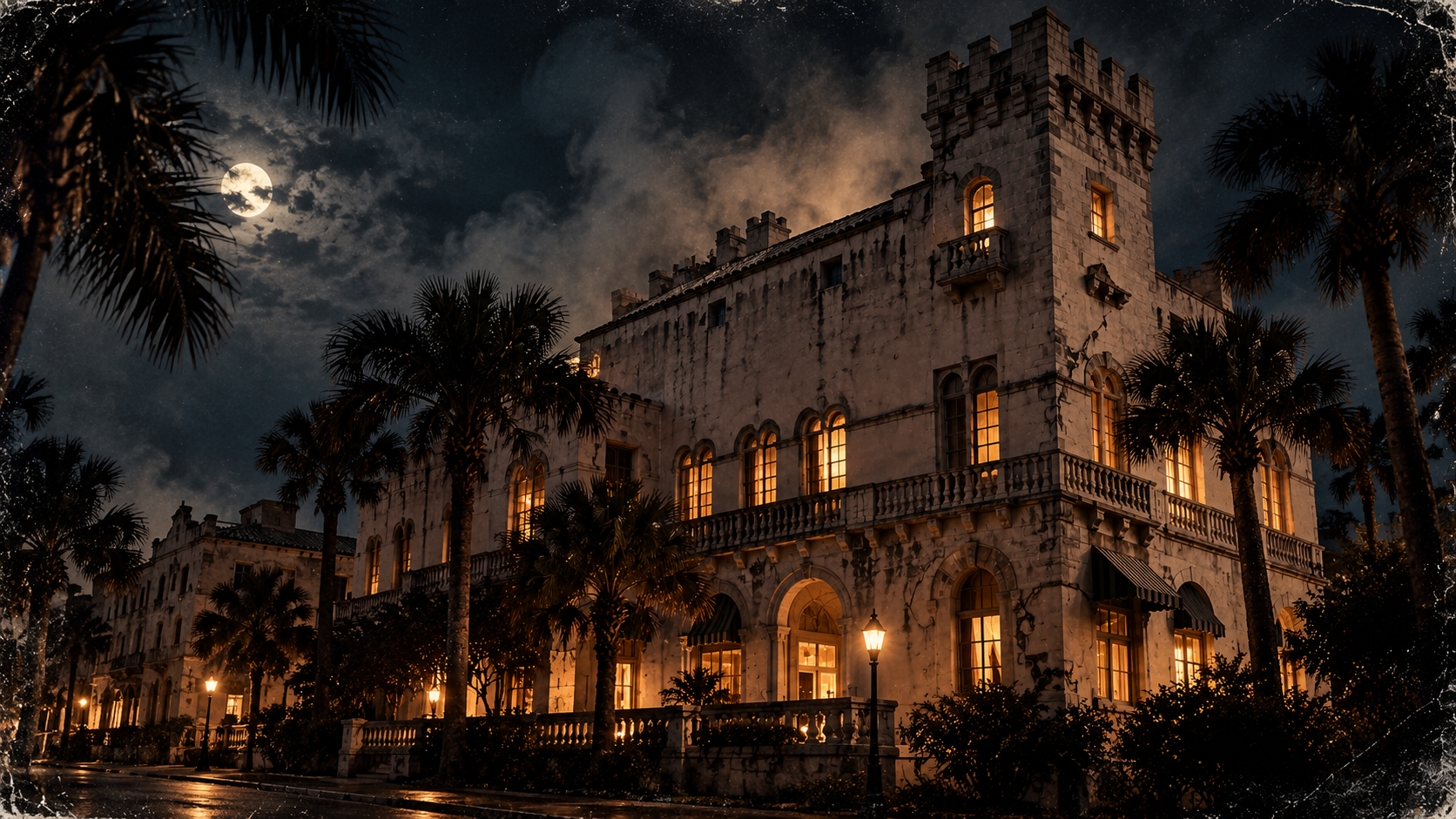
On April 23, 1944, fire swept through a fashionable St. Augustine hotel, claiming the lives of two women. More than eight decades later, their deaths remain intertwined with stories of an unidentified guest, suspicious circumstances, and possible foul play. But what does the historical record actually reveal?
By Shane Huey | Florida Unsolved
Historical Case File | October 2026
Date: April 23, 1944
Location: Castle Warden Hotel, 19 San Marco Avenue, St. Augustine, Florida
Victims: Ruth Hopkins Shackford Pickering and Betty Norvelle Richeson
Reported cause of death: Smoke inhalation, according to a later secondary account; original medical findings unexamined
Official cause of fire: No original determination located
Case status: Historical fatal fire; criminal involvement unsubstantiated
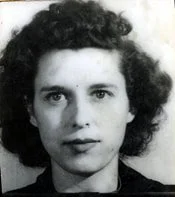
Florida Unsolved began with Dorothy Blanchard Thomas. The first overview of her murder appeared on May 25, 2019, followed by examinations of the crime scene, the claims circulating about the case, and Dorothy’s life. Those articles established the approach behind this project: return to the records, examine what they actually establish, and remember the person whose name appears on the file. [1][2][3][4]
The original reporting described a murder that had remained unresolved for more than six decades. On February 21, 2024, Tallahassee authorities announced a different status. Following a task-force review, they attributed Dorothy’s murder to longtime suspect Harry Barth and cleared the case by exceptional means because he had died. No arrest or trial followed. [5]
This retrospective brings those two periods together. It begins with Dorothy, then examines the original investigation and the distinction between identifying a suspect, establishing probable cause, and proving guilt.
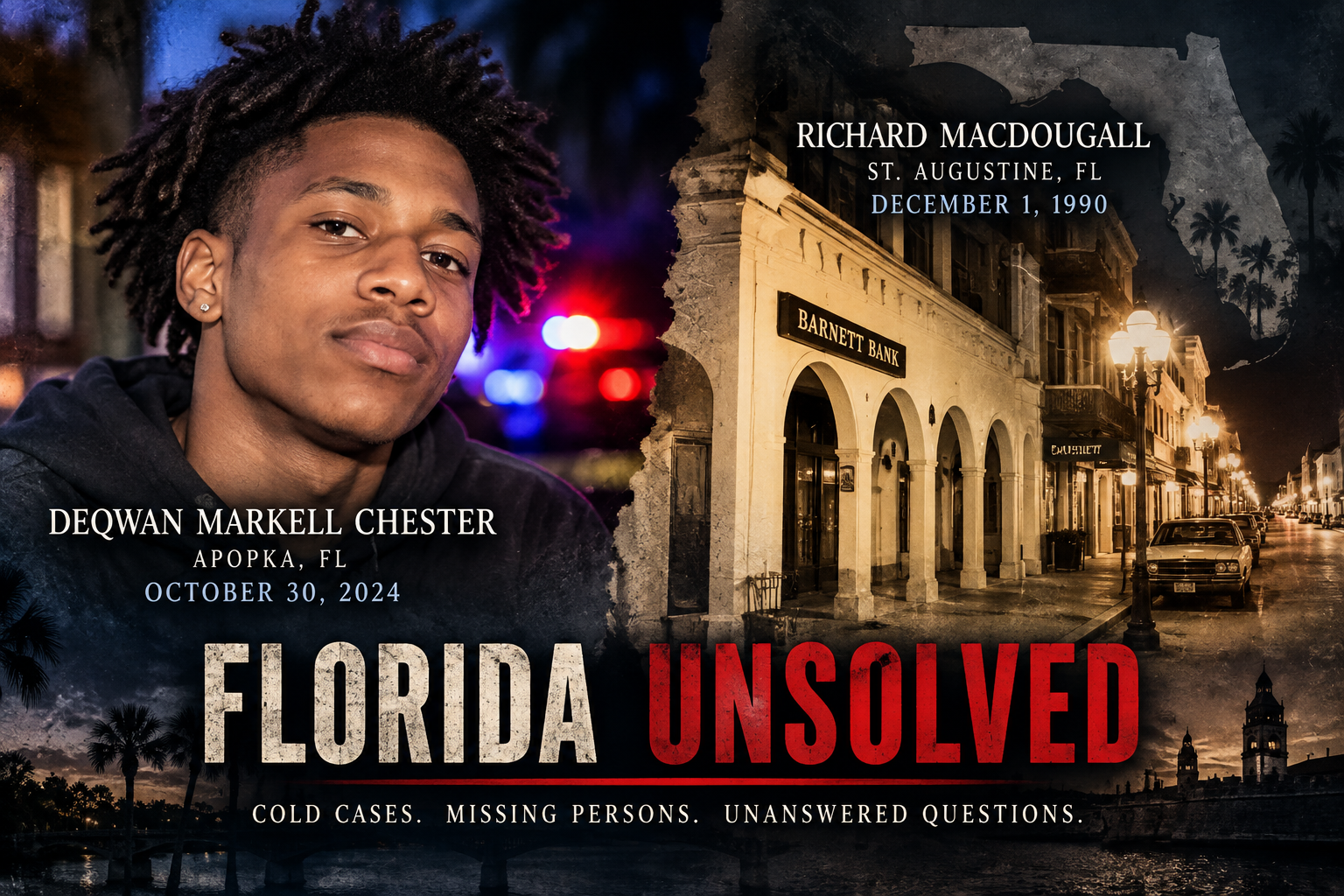
Two young men. Two Florida murders. Thirty-four years apart — and no answers. Deqwan Markell Chester was just 19 when he was gunned down near his Apopka home in 2024. Richard MacDougall was 23 when a confrontation on a St. Augustine street ended with his murder in 1990. Both cases remain unsolved. Someone knows what happened. Is it finally time they talked?
Miami sailor Miguel Campoy vanished off the Bahamas aboard his sailboat Hella in September 2025. His dinghy was later recovered, but Campoy and his vessel remain missing. Florida Unsolved examines the evidence, unanswered questions, and ongoing search for answers.
St. Augustine, Florida — the nation’s oldest city and, as far as we know, home of Florida’s first unsolved cold case.
One hundred eighty-eight years before the brutal slaying of Athalia Ponsell Lindsley on the front steps of her Marine Street home, long before Frances Bemis left for her usual evening walk never to return (both cases unsolved to this day), there was the unsolved murder of Lieutenant Guillermo Delaney. Delaney was stabbed and beaten as he walked along a dark stretch of Charlotte Street late in the cool Northeast Florida night in the waning weeks of 1785. Delaney succumbed to his wounds in January of 1786, dying in the same month as Lindsley would many years later with his assailants never having been identified or brought to justice.
Ancient City in the Dark
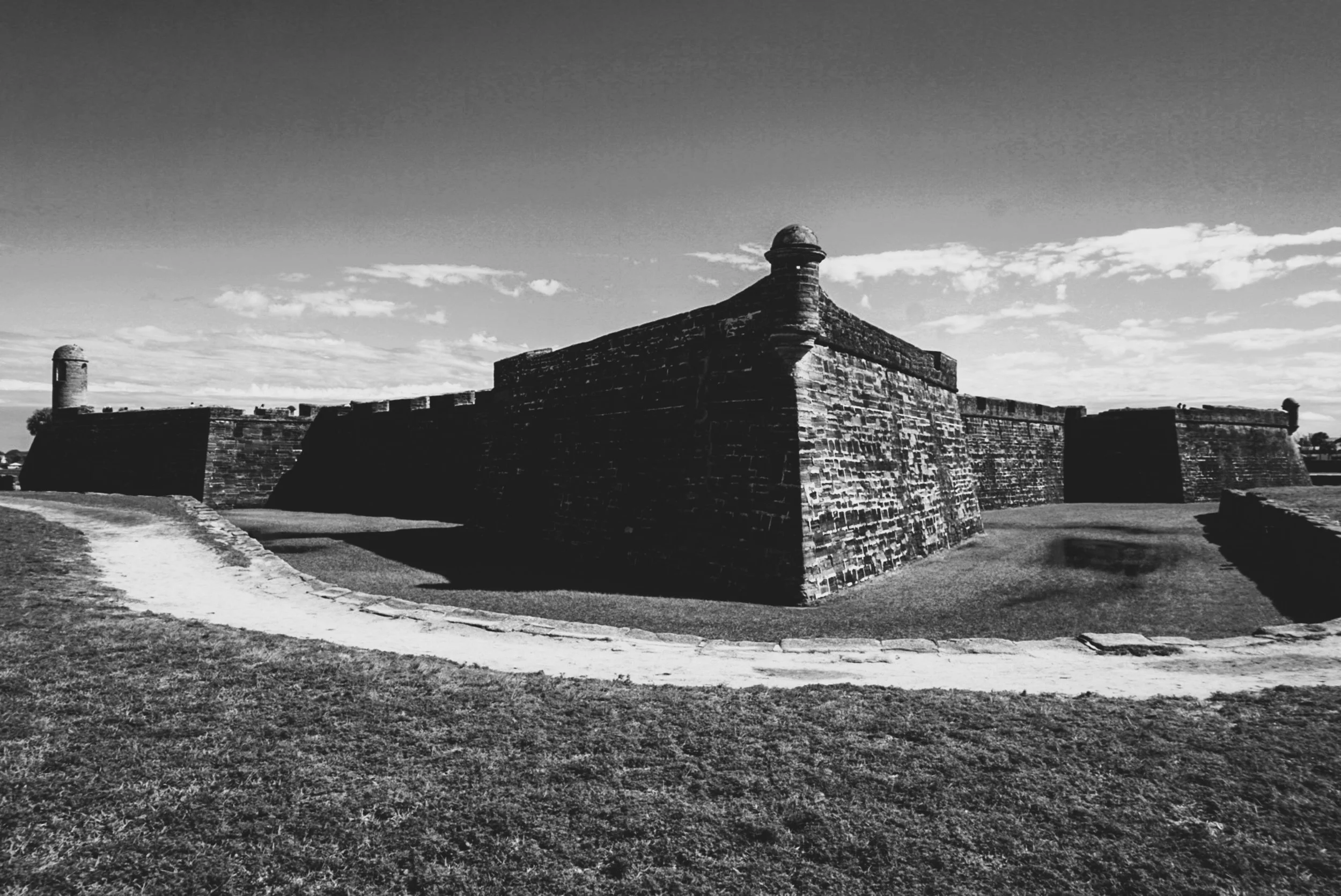
In November of 1785, East Florida was stabilizing post evacuation of around 10,000 British loyalists who had fled to the area during the period of the American Revolution. St. Augustine was, at the time, home to approximately 2,700 inhabitants with civilian population counting for less than 1000 of those. The majority were military personnel stationed at the Castillo de San Marcos along with their families. A garrison town, St. Augustine was then as it still is in many ways — insular, with everyone knowing everyone and everyone’s personal business being a matter of public discussion — in which daily life was structured by military rank.
Delaney, having served in a unit seeing much action during the Revolution, served as lieutenant in the Hibernia Regiment of Spain’s Irish Brigade. He was stationed at the Castillo de San Marcos by 1784, by all accounts a seasoned soldier continuing his tenure at a quiet post. But November 20, 1785 changed that.
Some time, between the hours of 9:30 to 10:00 that night, as Delaney was walking along Charlotte Street (at the time, known as San Carlos), a block north of current-day Treasury Street, he was attacked suddenly and without warning — stabbed and beaten by persons that he was unable to identify. Severely wounded, he made his way to the residence of one Josef Gomila to which he was already deliberately heading. This detail may be a significant clue.